

For decades, the classroom was a monolithic institution. A single teacher stood before rows of desks, delivering one lesson intended for all. But the modern classroom is not monolithic. It is a scattering of diverse minds: It includes the student with dyslexia who sees letters as a jumble, the English language learner navigating a new linguistic world; the gifted child yearning for a greater challenge, and the student with ADHD who struggles to maintain focus.
The one-size-fits-all model, a relic of a less-informed era, is finally giving way to a more agile, responsive, and equitable approach, powered by the transformative potential of technology.
Technology in education is a necessity. It’s the key that unlocks personalized learning pathways, demolishes long-standing barriers, and empowers every student to engage with curriculum on their own terms. This digital revolution is fundamentally reshaping how to support the vast spectrum of learners in schools, no matter the budget or demographic.
Accessibility
At its most fundamental level, technology levels the playing field. For students with disabilities in need of qualified, special education teachers, what were once insurmountable obstacles are now manageable hurdles. Assistive technology has moved from clunky, specialized hardware to elegant, integrated software that fosters independence rather than dependence.
Consider the student with dysgraphia, for whom the physical act of writing is a major barrier to expressing complex thoughts. Speech-to-text software, now seamlessly integrated into laptops and tablets, allows them to dictate essays, notes, and creative stories, liberating their ideas from the mechanics of handwriting.
Conversely, text-to-speech tools read digital text aloud, providing an essential scaffold for students with dyslexia or visual impairments. They can listen to a novel, a science textbook, or a set of instructions, allowing them to focus on comprehension rather than decoding. These tools don’t just accommodate, they empower. They give students agency over their own learning process, building confidence and reducing the stigma often associated with learning differences.
The End of “One Size Fits All”
Beyond basic accessibility lies the frontier of true personalization, driven by artificial intelligence and adaptive learning platforms. These sophisticated systems function as digital tutors, capable of differentiating instruction on a scale a single teacher could never achieve.
Imagine a math class using an adaptive learning program. One student, struggling with fractions, is automatically presented with foundational exercises and video tutorials to shore up their understanding. Meanwhile, their classmate who has mastered the concept is given advanced word problems and challenges that stretch their abilities. The software analyzes every correct and incorrect answer in real-time, adjusting the difficulty and pace for each individual.
With detailed analytics on student performance, teachers can identify specific skill gaps, form targeted small groups for intervention, and devote their invaluable human energy to providing encouragement, context, and higher-order thinking challenges.
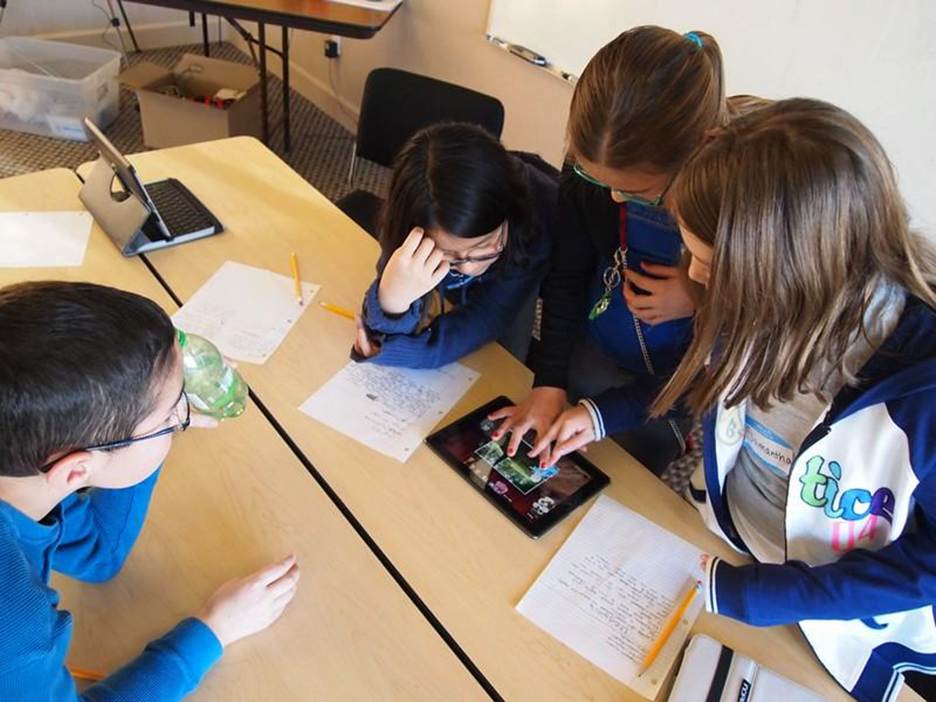
Engaging Multiple Intelligences
The theory of multiple intelligences has long been a touchstone in education, yet traditional teaching methods have overwhelmingly favored linguistic and logical-mathematical learners. Educational technology shatters this limitation, offering a rich tapestry of tools to engage every type of intellect.
For the visual-spatial learner, a static diagram of a human cell in a textbook pales in comparison to exploring it in three dimensions through an augmented reality (AR) app. For the kinesthetic learner, abstract coding concepts become concrete when they can program a small robot to navigate a maze.
The Human Element
It is crucial, however, to view technology as a powerful tool in the hands of a skilled educator. The success of this digital transformation hinges on the human element. A tablet full of apps is useless without a teacher who can curate the right content, foster a culture of digital citizenship, or, most importantly, build strong relationships with their students. Technology can provide personalized feedback on a math problem, but it cannot offer a comforting word after a difficult day or inspire a lifelong passion for literature.
The goal is not to replace teachers with algorithms, but to augment their capabilities. By automating differentiation and data collection, technology frees educators to do what they do best: connect, inspire, and cultivate the social-emotional skills that are vital for success in life.
The classroom of the future is not one of isolated students staring at screens. Whether education leaders choose to go the PhD or Ed.D route, the future holds a dynamic, flexible environment where technology serves as the great equalizer, creating a space where every learner—regardless of their profile, background, or ability—is seen, supported, and given the opportunity to thrive.

 EDTECH 4 BEGINNERS